

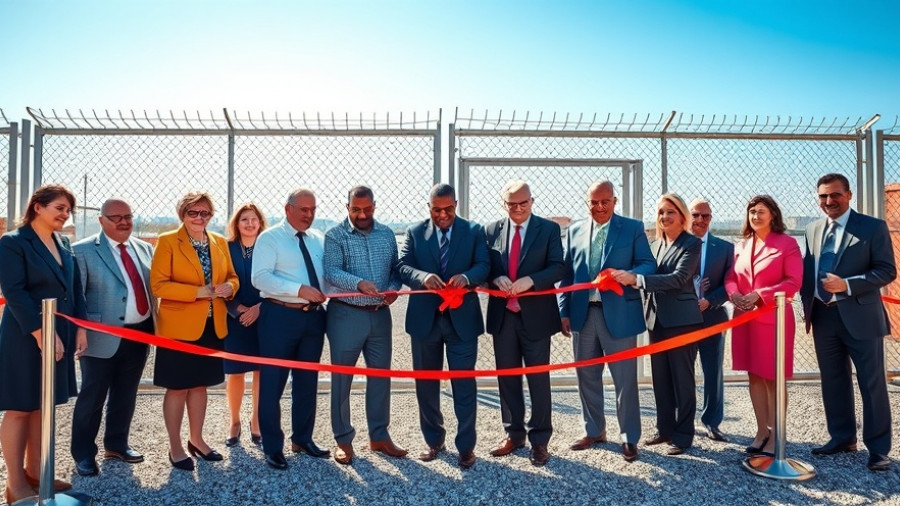
Critical Training for Louisiana's Emergency Responders
On October 21, the Louisiana State Fire & Emergency Training Academy (FETA) and River Parishes Community College (RPCC) held a ribbon-cutting ceremony to officially launch the Louisiana Pipeline Emergency Training Program, a significant step towards enhancing emergency preparedness for firefighters across the state. With over $500,000 in contributions, including a $50,000 donation from ExxonMobil, this initiative aims to give first responders the tools they need to effectively handle CO₂ pipeline emergencies.
What Makes This Training Innovative?
The program integrates a unique CO₂ pipeline training prop, which develops real-world skills through hands-on exercises. Firefighters previously traveled out of state, particularly to Texas A&M, for similar specialized training. Now, they can receive it right in Louisiana, eliminating travel costs and increasing access to essential skills. Chief Bryan J. Adams from the Louisiana Department of Public Safety highlighted the importance of this initiative: “Pipelines are an important part of Louisiana’s infrastructure and energy future, but with that comes responsibility,” he stated.
Engaging Hands-On Learning
Participants will engage in a comprehensive curriculum that includes both classroom instruction and practical exercises. At RPCC in Gonzales, they’ll learn about pipeline terminology, equipment, and the specific hazards associated with CO₂ transport. This foundation will be supplemented by live fire and release simulations at the FETA facility in Baton Rouge, ensuring that first responders not only understand the theory but can also apply it effectively in emergency situations.
Community Commitment to Safety
ExxonMobil's commitment to safety is central to this program, with Brian Carlin, CO₂ Operations Manager at ExxonMobil, stating, “Training is the foundation of safety. We’re proud to work alongside FETA and RPCC to make world-class CO₂ emergency training available right here in Louisiana.” This partnership aims to ensure every firefighter, regardless of their department's size, has access to life-saving education and training resources.
The Importance of Continuous Learning
Lifelong learning is essential for fire service professionals, as emergencies can vary significantly. The varied training will help develop strategies to address a range of scenarios that responders might encounter in their careers. As stated by Chancellor Quintin Taylor of RPCC, “This program allows teams to practice real-life scenarios, ensuring the safety of both our communities and our responders.” By investing in training, Louisiana is not only enhancing the skills of its firefighters but also ensuring the safety of its communities.
Future Implications for Pipeline Management
The effective training initiatives resulting from this program can serve as a model for other states looking to enhance their emergency response training. As the owner of the largest CO₂ pipeline network in the U.S., ExxonMobil's findings could lead to improved safety regulations and quality assurance in pipeline management, ultimately benefiting communities reliant on these critical infrastructures.
If you enjoyed this story, why not stay connected? Join New Orleans Local Unplugged on Facebook and YouTube for exclusive local information. @neworleanslocalunplugged


Write A Comment